
Comparison
Pour-Over vs French Press
A clean, bright cup or a rich, full-bodied one? Compare taste, effort and cleanup to choose between a pour-over dripper and a French press.
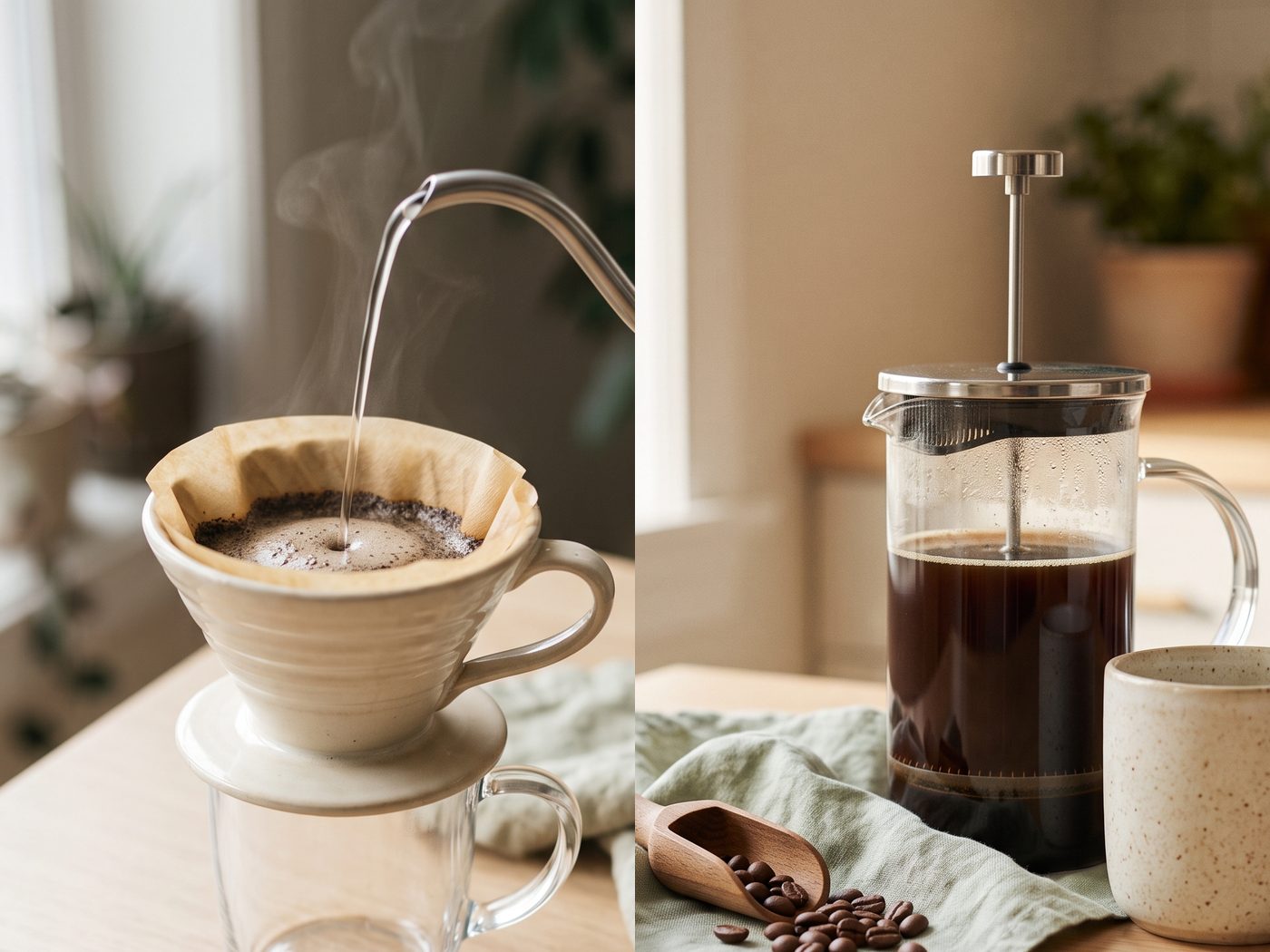
Both brewers need only ground coffee and hot water, and both are inexpensive to start with. The main difference is the filter. A pour-over uses a paper filter, and a French press uses a metal mesh.
Side by side
| Pour-over | French press | |
|---|---|---|
| Filter | Paper | Metal mesh |
| Taste | Clean, bright, lighter body | Rich, round, fuller body |
| Grind | Medium | Coarse |
| Time | About 3 minutes, with attention | About 4 minutes, mostly hands-off |
| Skill | A little practice with the pour | Very forgiving |
| Cleanup | Toss the filter and grounds | Scoop the grounds, rinse the carafe and mesh |
| Batch size | One or two mugs at a time | Easy to brew for two to four |
Why the filter matters
Paper traps most of the oils and fine particles, so the cup is clear and the flavors are easier to tell apart. Metal lets some oils and fine particles through, so the cup feels heavier and richer, with a little sediment at the bottom.
Which should you pick?
- Pick a pour-over if you like a light, clean cup and enjoy a short morning ritual. A kettle with a thin spout helps you pour slowly.
- Pick a French press if you want something simple and forgiving, or you brew for more than one person.
Not sure yet? Start with French Press Basics, then try Pour-Over Basics and compare.
Try it at home
Gear that fits
-
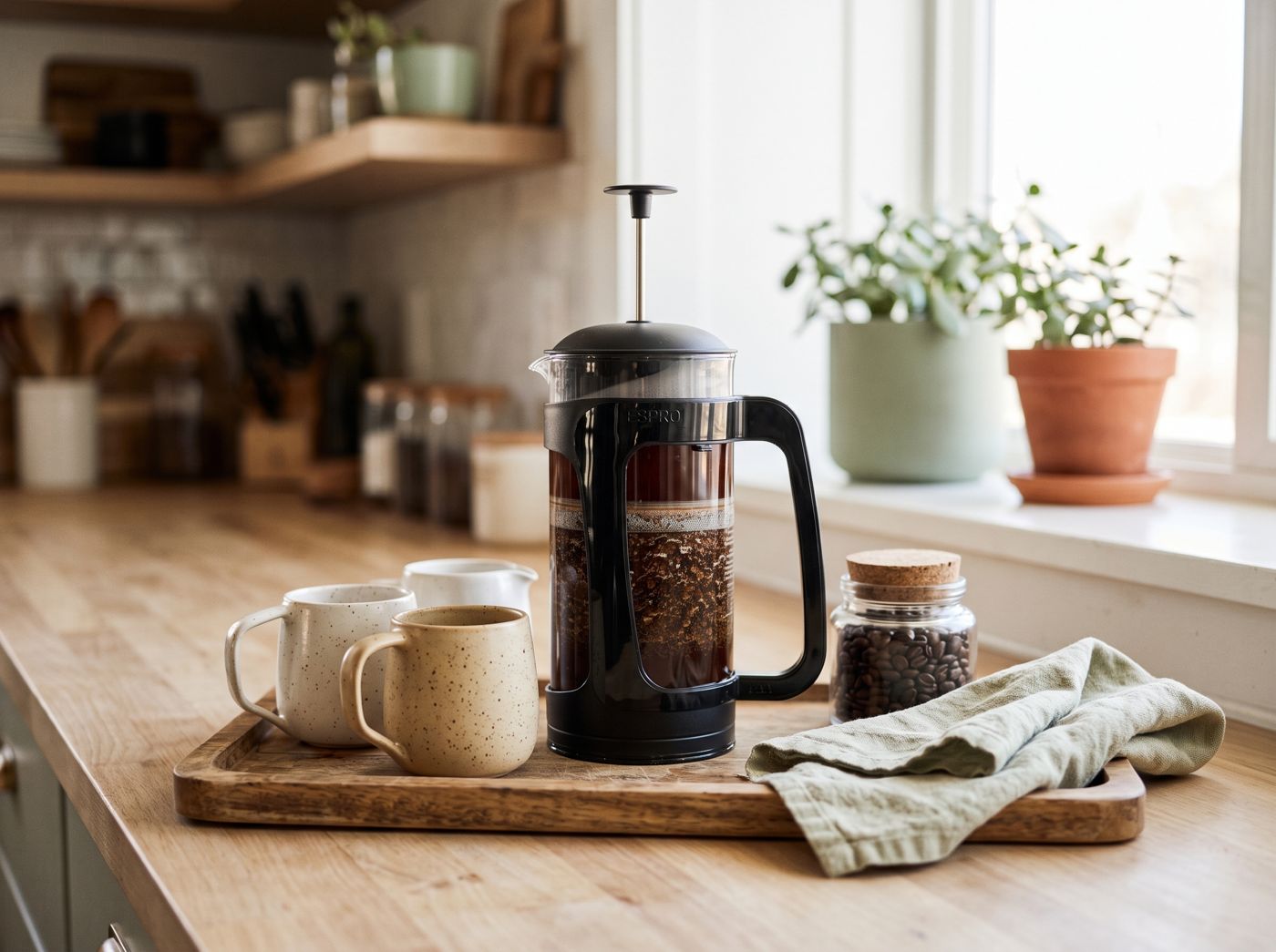 ESPRO ESPRO Press P3 French press fans who are tired of grit at the bottom of the cup. Who it suits (ESPRO Press P3)
 -
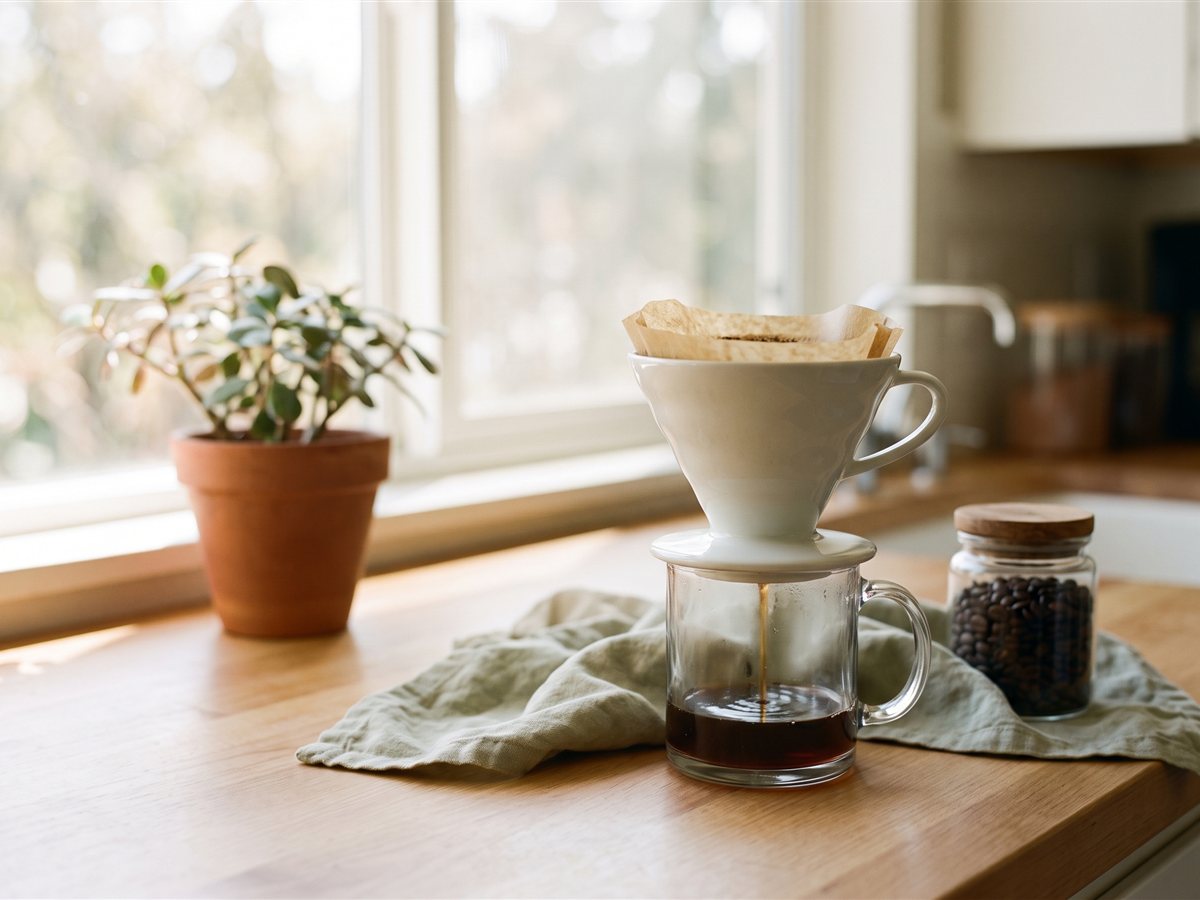 Generic cone style Ceramic cone dripper (size 02) A clean, bright mug of coffee, one to two cups at a time. Who it suits (Ceramic cone dripper (size 02))
 -
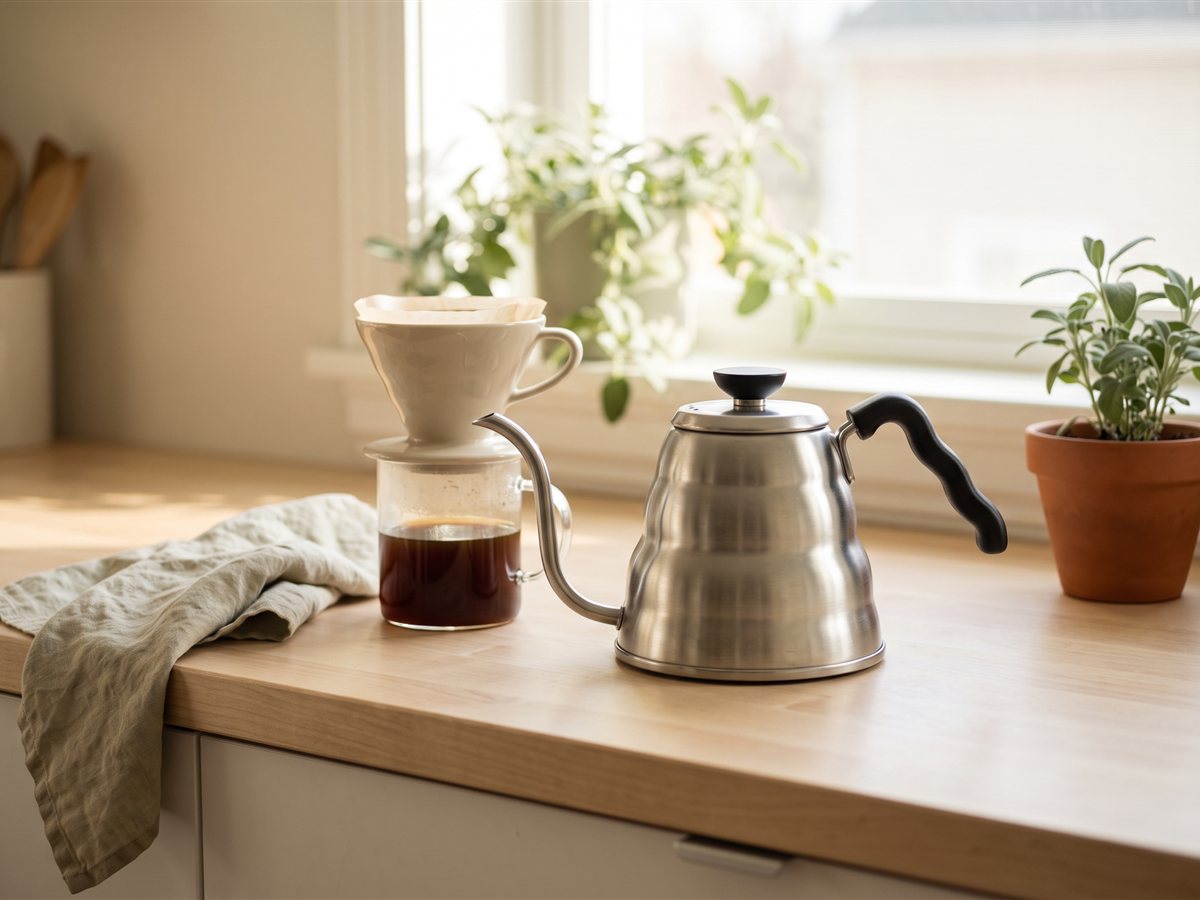 To be chosen Gooseneck kettle Pour-over and anyone who wants a slow, controlled pour. Who it suits (Gooseneck kettle)
Some links on the gear page are affiliate links. Disclosure.